Guides
What do Miami hurricane codes and salt air mean for solar panel warranties?
Miami solar panel warranties hinge on Florida wind ratings, salt air corrosion, FPL interconnection, and inverter hardware choices that decide claim outcomes.
What to take away
- Miami-Dade sits in the High Velocity Hurricane Zone, so an array is approved on its racking and attachment spacing, not on the panel alone.
- A mixed-brand rack and panel combination has no wind rating, and that gap is what warranty administrators look for first.
- Chloride from sea spray pits bare aluminum rails, bolts, and frames; stainless and marine-grade hardware slow it down.
- FPL will not let a system export until the interconnection agreement is approved and the bi-directional meter is swapped.
- Keep the permit, the product approval number, torque logs, and meter photos together. Claims stall on missing paperwork, not on the damage.
What Florida hurricane code asks of a Miami rooftop array
Miami-Dade is in the High Velocity Hurricane Zone, the toughest wind region in the Florida Building Code. An array there must be engineered for the design wind speed of the address, and that number rises with exposure and height.
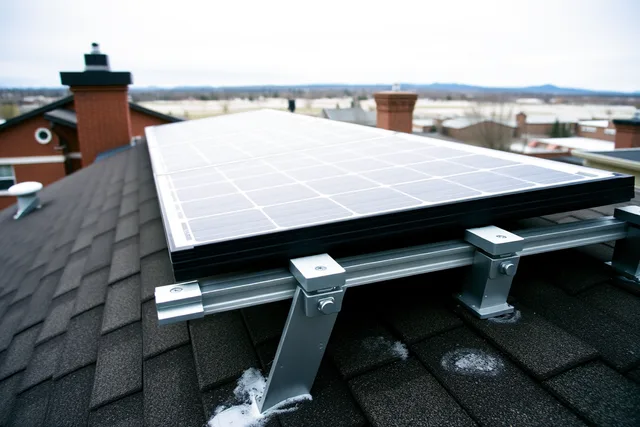
The structural approval usually rides on the racking, not the module. Racking makers publish wind ratings for a specific panel, attachment, and spacing combination, drawn from wind tunnel tests and sealed engineering reports. Change the spacing or swap the panel and the rating no longer applies.
The Florida Product Approval database lists systems that meet the code, and the inspector checks for that approval number. Roof covering matters too: tile, standing seam metal, and membrane each fail differently, and each has its own attachment detail. A re-roof permit may be required before solar goes on if the deck is near the end of its life.
Wind risk is not theoretical in a season that NOAA expects to run below normal. NOAA maintains its prediction for below-normal activity, and one landfall still tests every attachment point. Contractors preparing crews can use severe storm resources, and after a storm FEMA business assistance helps a shop recover so it can still service warranty calls.
Fire access is the other half of the plan review. NFPA 1 rooftop setback and labeling provisions set where an array may sit and how it is marked for firefighters.
Electrical design follows the NEC, and NFPA 70 is the NEC, which Miami applies with local amendments.
A failed inspection is a warranty problem later, so route the design past a licensed electrician and, where the deck is in question, a structural engineer.
Salt air corrosion and the hardware that survives it
Chloride ions from sea spray settle on metal, break the passive oxide layer on aluminum, and let oxygen and moisture reach the base metal. The result is pitting, white rust, and rails that thin from the inside. Corrosion slows with distance from the ocean, but it does not stop.
Hardware is the main defense. Stainless bolts, marine-grade aluminum rails, and anodized or coated components resist chloride far better than bare mill-finish aluminum. Isolate dissimilar metals so galvanic corrosion does not start at the joint.
Racking makers publish corrosion warranties for coastal work, and some exclude coastal installation unless a named hardware list is used. Read that document before you quote. A single wrong bolt can end a 25-year racking warranty in one season.
Module frames are anodized, but field cuts and scratches expose bare metal. Touch-up and sealant on those cuts are small habits that protect the frame. Connectors and junction boxes corrode too, so specify parts rated for wet, salty locations.
Rinsing an array with fresh water after storm season removes salt deposits and protects the anti-reflective coating. Log the date. Insurance types and typical premiums for coastal work track this risk, and carriers ask what your corrosion protocol is before they quote.
Equipment brands hold up differently in salt air. Some racking lines are built for marine environments and some are not, so check the corrosion warranty term and the required hardware list before you standardize a brand across the fleet.
FPL interconnection, and why the timeline shapes warranty practice
Florida Power & Light runs interconnection for most Miami arrays, and the system cannot legally export until FPL approves it. The application needs a signed interconnection agreement, a one-line diagram, and proof of the local permit.
Review time moves with system size and queue volume. Residential jobs generally clear faster than commercial, and neither is instant. The common mistake is scheduling the install before the utility approves the design.
After approval, the crew finishes the work and requests a witness test or inspection. FPL then installs or programs the bi-directional meter. Only then does the array export and the customer see bill credits.
Tell the homeowner that sequence on day one. A customer who thinks the system is live before the meter swap may run it and backfeed, which damages equipment and muddies a claim.
Interconnection also fixes inverter settings and grid support functions. Modern inverters must ride through set voltage and frequency events.
Wrong settings trip the system offline and look like a hardware failure when the fix is a configuration change. Keep the approval letter and meter photos in the job file, because a warranty administrator uses them to confirm the system was commissioned legally.
How warranty language treats wind and corrosion claims
Most module warranties cover defects in materials and workmanship, not storm damage. Wind and corrosion exclusions are standard, and the real question is whether the installer's work voided the coverage.
Typical exclusion language drops coverage when the product was installed against the manufacturer's instructions, the code, or the racking maker's requirements. Torque specs, attachment spacing, and grounding details decide that. Assume the adjuster will ask for all three.
Corrosion exclusions often name salt air and coastal environments outright. Some manufacturers sell a separate coastal warranty or require annual inspections. Without that record, a pitted rail claim can be denied even when the pitting began inside the term.
Installer workmanship warranties are separate and usually cover roof penetrations and flashing for a set number of years. Read the caps: many limit labor and exclude the module itself. When a hurricane claim arrives, the sequence is inspection, causation, then coverage.
A worked example. A Miami Beach homeowner files after a tropical storm. The adjuster finds two rails with white rust and one lifted attachment. The corrosion is excluded. The lifted attachment is covered under the workmanship warranty because the installer used the wrong bolt for the substrate. The module is fine.
A coastal commissioning routine
Good installation is warranty risk management. Every step that follows the code and the manual makes a future claim easier to approve, and every shortcut hands an adjuster a reason to say no.
- Confirm the Florida Product Approval number for the racking and panel combination.
- Verify the design wind speed for the address against the attachment spacing in the engineering report.
- Photograph the deck, trusses, and any existing damage before work starts.
- Record torque on every structural fastener with a calibrated wrench.
- Check that stainless or marine-grade hardware is used at all coastal attachment points.
- Document the rapid shutdown and labeling layout required by NFPA 1 and the NEC.
- File the FPL approval letter and meter photos with the permit.
For the commissioning visit itself:
- Inspect every rail, bolt, and connector for dissimilar metal contact and isolate where needed.
- Torque all structural fasteners to the racking maker's published values and log them.
- Verify grounding and rapid shutdown, then photograph labels and disconnects.
- Record inverter settings and confirm they match the interconnection agreement.
- Rinse the array with fresh water, note the date, and book the next rinse after storm season.
A quality assurance that matter to warranty outcomes is a photo log, torque records, and a signed handover packet. Give the homeowner a folder with the permit, the approval letter, and the maintenance schedule.
A compliance checklist for new owners sets out what the customer must do to keep coverage: rinse, report damage, and call the installer before any repair. Service quality shows in how a claim is handled. The contractor who answers the phone and files the paperwork protects the homeowner and the brand at the same time.
Common questions
Does a Florida hurricane code violation void my solar panel warranty?
It can. Most manufacturers exclude coverage when installation does not follow the code or their instructions. Inspectors and adjusters check the product approval number and the attachment details before anything else.
How does salt air corrosion affect solar panel warranties in Miami?
Corrosion is usually excluded unless the warranty carries a coastal provision. Marine-grade hardware and a dated rinse log are what keep a claim alive. Confirm the terms with the racking manufacturer and your insurer.
How long does FPL interconnection take for a residential array?
Timelines vary with queue volume and system size. The process runs from application review through local inspection to the meter swap, and the system cannot export before that last step.
What records should an installer keep to support warranty claims?
Permits, the racking approval, torque logs, and photos. The FPL approval letter, and maintenance dates. These are the first items a warranty administrator requests, and missing paperwork stalls a claim faster than the damage does.