Guides
Designing solar for hail and snow in Denver, equipment choices that survive
Denver solar design covers hail ratings, snow load racking, warranty exclusions, and cold-weather equipment selection before modules reach the roof.
What to take away
- Module choice in Denver is a durability decision first. Ask your distributor for the hail test report, not the spec sheet headline.
- The racking span table must list your design snow load, not just wind. If the table stops at wind, the rack does not fit the job.
- Xcel Energy rebate terms and the federal credit change what you can sell. Confirm current numbers with the utility and the customer's tax professional before you quote.
- Hail is often excluded from one warranty document and partly covered by another. Read all three before signing a supply agreement.
- After a storm, document before you repair. Photos, timestamps and an output comparison against the pre-storm baseline are the claim.
Denver hail risk and what it does to module selection
Denver sits where cold fronts from the north meet moist Gulf air. That collision produces large hail along the Front Range most warm seasons, and the risk is not spread evenly across the metro. Design to the corridor your crews actually build in.
The National Oceanic and Atmospheric Administration tracks the climate patterns behind those storms and publishes severe storm and hail risk resources for the region. Both are the baseline most designers cite when they justify a hail assumption for a Colorado array.
Module hail rating is the number to demand. Most manufacturers test to 1 inch ice spheres at a stated velocity, and stronger products carry an extended rating above that. Ask for the test report, because the marketing line and the report do not always say the same thing.
Named products worth pricing against each other:
- Maxeon 6 and Maxeon 7 (Maxeon Solar Technologies). Interdigitated back contact cells, no front busbars, and a hail rating the company publishes well above the 1 inch baseline. Premium price, premium warranty term. Suits hail-corridor roofs where the homeowner plans to stay.
- REC Alpha Pure-R (REC Group). Heterojunction cells, published hail rating to 1 inch ice spheres at 27 m/s, and a 25 year product warranty. Mid-premium pricing. Suits the standard Denver residential job.
- Qcells Q.TRON BLK M-G2+ (Hanwha Qcells). N-type cells with a 25 year product and performance warranty, widely stocked through US distribution. Mid-market pricing. Suits volume crews who need fast replacement stock.
- Silfab Solar (Silfab, US and Canada manufacturing). Publishes hail ratings and builds in North America, which shortens replacement lead time after a storm. Mid-market pricing. Suits contractors who value parts availability over peak wattage.
- Canadian Solar (Canadian Solar Inc). Broad distribution, competitive pricing, hail ratings published per model. Entry to mid pricing. Suits bid-sensitive jobs where the roof is not in the worst corridor.
Glass thickness, frame alloy and junction box placement all move the outcome. Thicker tempered glass resists pitting. A sturdier frame reduces the corner microcracking where hail damage usually starts.
Tilt and mounting height change exposure too. Steeper tilt sheds hail better than a flat array, and roof clearance gives debris a path away from the glass.
Structural research from the National Institute of Standards and Technology covers how building components should behave under impact and wind loads. Read it before you standardize on one module. Our notes on which equipment brands hold up are a faster starting point.
Keep spares of the exact model you install most. Matching a discontinued panel after a claim is slow and expensive.
Snow load engineering and racking choices for Colorado roofs
Snow load engineering starts with the ground snow load for the site, then applies exposure, thermal and slope factors to reach the roof snow load. Denver's elevation pushes those figures above many coastal markets, and drifting on lower roof sections concentrates load past the uniform value.
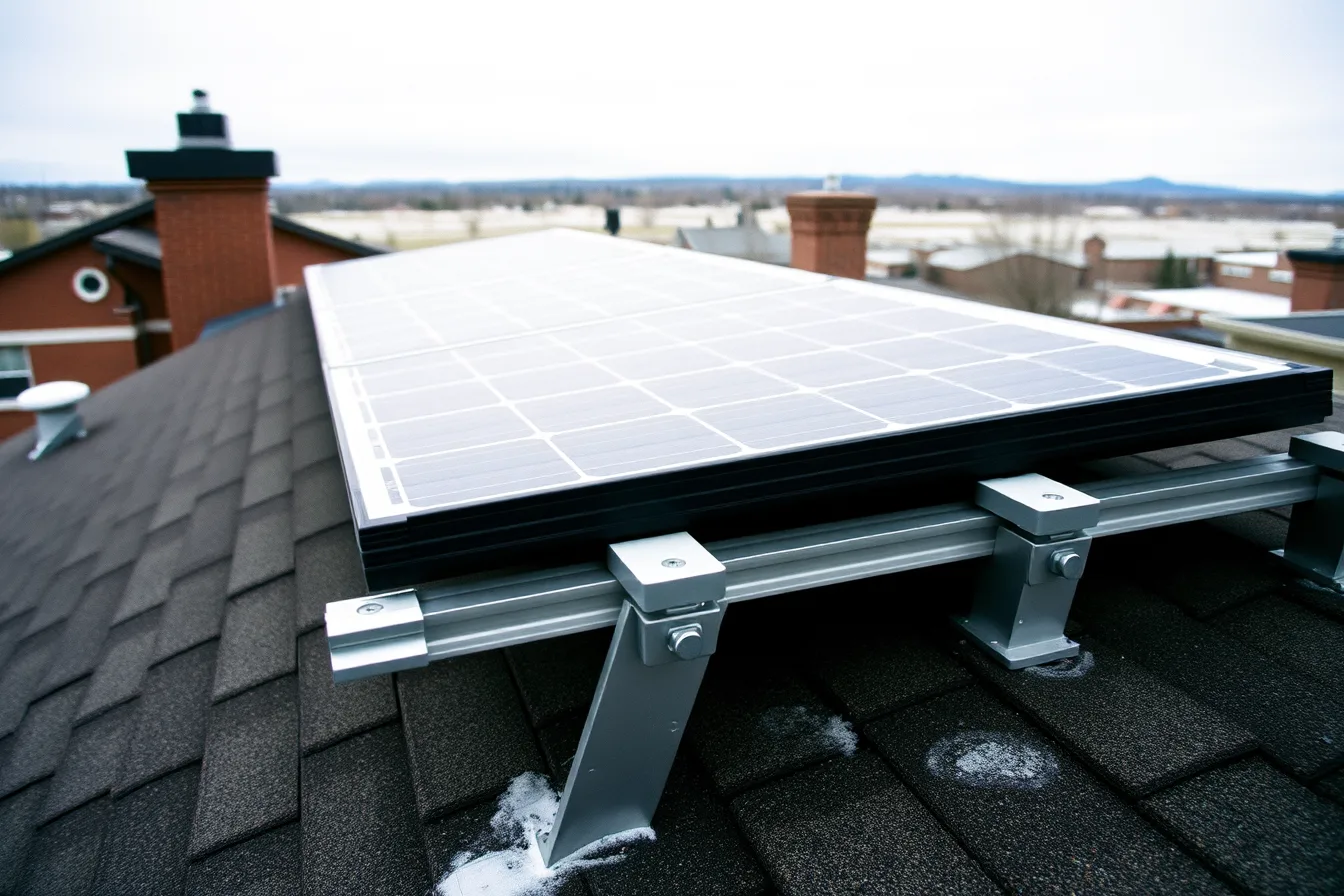
Racking specification follows from that calculation. Rail span, attachment spacing, fastener type and standoff height get set by an engineer or a stamped table, never by habit.
Named racking lines and what each is built for:
- IronRidge XR10 and XR100 (IronRidge). XR10 is the residential workhorse; XR100 takes longer spans for higher loads. IronRidge span tables list snow and wind separately, so you can confirm the design load is covered. Mid-market pricing.
- Unirac SolarMount (Unirac, a Gibraltar Industries company). Long-standing residential and commercial line with published span tables and a wide attachment catalog. Mid-market pricing.
- Pegasus Solar (Pegasus Solar). Rail-free residential mounting with fewer roof penetrations. Suits tile and composition roofs where penetration count drives the workmanship risk.
- S-5! clamps (S-5!). Standing seam metal roof attachments, no penetration. Suits metal roofs, and demands the clamp torque setting hold through thermal cycling.
- Ecolibrium Solar (Ecolibrium). Ballasted and hybrid commercial systems. Suits flat commercial roofs where attachment is limited.
A few checks that hold up in this market:
- Confirm the ground snow load for the actual address, not the nearest city on a map.
- Check truss spacing and sheathing thickness before assuming direct attachment.
- Size rail and attachment spacing to the governing snow load plus a drift margin.
- Verify the racking span table covers your snow load, not just wind.
- Keep the calculation with the permit package.
Heavier gauge aluminum and shorter spans cost more and fail less. Cheap rail with wide attachment spacing is where snow load problems show up first.
Roof type changes the answer. Asphalt shingle takes flashed attachments. Standing seam metal usually takes clamps, which avoid penetrations but demand clamp torque settings that survive thermal cycling.
Ground mounts need their own foundation design. Frost depth and snow accumulation at grade are different problems from roof loading. Treat them as separate engineering tasks.
If you are building out a crew and a truck stock, our equipment review covers what holds up across a Colorado season.
Xcel Energy rebate programs that change payback
Xcel Energy runs the main utility incentive pathway for Denver customers, and program structure affects what you can sell. Rebate amounts and eligibility rules change, so confirm current terms with Xcel before you quote a number to a homeowner.
What stays stable is the design implication. When a rebate is tied to system performance or to listed equipment, the cheapest module is often not the one that maximizes the customer's return. Higher-efficiency, hail-rated modules can win on the math once the incentive applies.
The federal Residential Clean Energy Credit, administered by the Internal Revenue Service, applies to qualifying residential solar expenditures. It is a credit, not a rebate. Homeowners should confirm eligibility with a tax professional rather than a sales sheet.
The Database of State Incentives for Renewables and Efficiency tracks utility and state programs. It is the fastest way to check whether a Denver address qualifies for anything beyond the Xcel program.
Interconnection is the other half of payback. Xcel's review timeline sets when the system actually produces, and a delayed permission to operate pushes first-year savings later.
Paperwork quality drives approval speed. A complete application with correct equipment listings and a clean single line diagram moves faster than one that gets returned.
For contractors weighing capital costs against rebate-driven upsells, our guide to buying new or used equipment is worth reading before the next truck purchase.
Warranty terms that actually cover hail and snow damage
Warranty hail and snow clauses are where Denver claims are won or lost. A product warranty and a workmanship warranty are different documents. Hail is often excluded from one and partly covered by the other.
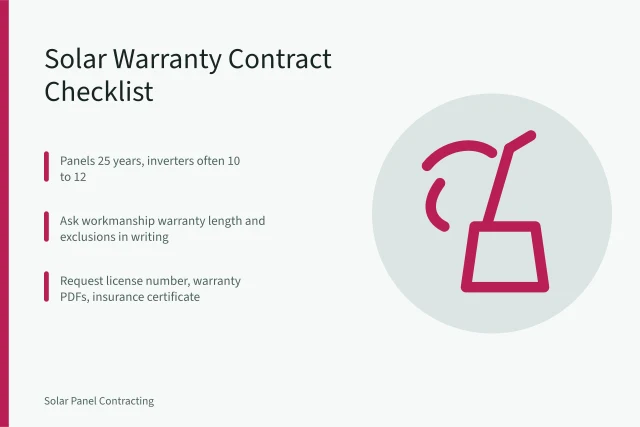
Read three things in any module warranty: whether hail is covered at all, what impact energy the coverage assumes, and whether labor and shipping are included. Many warranties cover the replacement module and nothing else.
Racking warranties typically cover defects in materials and finish, not damage from a load event. Snow load damage usually gets classified as an installation or design issue, which pushes the claim back to the contractor.
Workmanship warranties are your exposure. A ten-year workmanship term with a hail exclusion means you carry the roof penetration and attachment risk yourself.
Insurance sits alongside warranty. After a widespread hail event, federal disaster assistance for governments and nonprofits can matter for public and institutional arrays, and business disaster assistance is relevant to contractors recovering their own operations.
Keep the following in your contract file for every job:
- Module spec sheet with the hail rating test report
- Racking span table showing the design snow load is covered
- Signed structural calculation or stamped letter
- Warranty documents for modules, racking and inverters
- Workmanship warranty with hail and snow language highlighted
- Photographs of the completed array before handover
- Homeowner insurance contact noted in the file
If a manufacturer will not state a hail position in writing, treat that silence as an exclusion.
Our equipment checklist widens this into a full job file standard for every crew.
Inspection and documentation practices after storm events
After a hail or heavy snow event, the first task is a documented inspection, not a repair. Photograph the array from multiple angles, note the date and time, and record visible pitting, cracked glass or displaced attachments.
Electrical testing matters as much as visual inspection. Microcracks invisible from the roof surface can reduce output, so an IV curve trace or a performance check on a clear day gives you evidence a visual survey cannot.
Compare production against the pre-storm baseline. A sudden drop in one string's output is the clearest signal that something failed.
File the claim early. Insurers and the utility both work on timelines, and a claim filed weeks after the event invites questions about causation.
Keep a storm log for the whole portfolio. When the same module model fails across Denver jobs, that pattern is your strongest argument with the manufacturer and your case for changing suppliers.
Our quality assurance that matter checklist is a reasonable template for turning a one-off inspection into a repeatable process.
Tell the homeowner what happens next in writing. Clear expectations after a storm protect the relationship and reduce the chance a warranty dispute becomes a referral problem.
Common questions
Does Denver hail actually damage solar panels?
Yes. Large hail along the Front Range can crack glass, pit the surface and displace attachments. Damage often shows up as reduced output rather than obvious breakage, which is why an output comparison against the pre-storm baseline matters more than a visual walk.
What hail rating should I specify for a Denver array?
Look for a module tested to at least 1 inch ice spheres at the manufacturer's stated velocity, and ask for the test report rather than a marketing claim. Several manufacturers publish extended ratings above that baseline. Confirm the rating applies to the exact model number you are ordering.
How is snow load calculated for a Colorado roof?
Start with the site ground snow load, apply exposure, thermal and slope factors, then check drift on lower roof sections. The racking span table must cover the resulting load, not just wind. A licensed structural engineer signs off on the calculation for the address.
Are hail and snow covered by solar warranties?
Sometimes partially. Module warranties may cover hail with limits, racking warranties usually exclude load events, and workmanship coverage is where your own exposure sits. Read all three documents before signing a supply agreement, and treat an unwritten hail position as an exclusion.